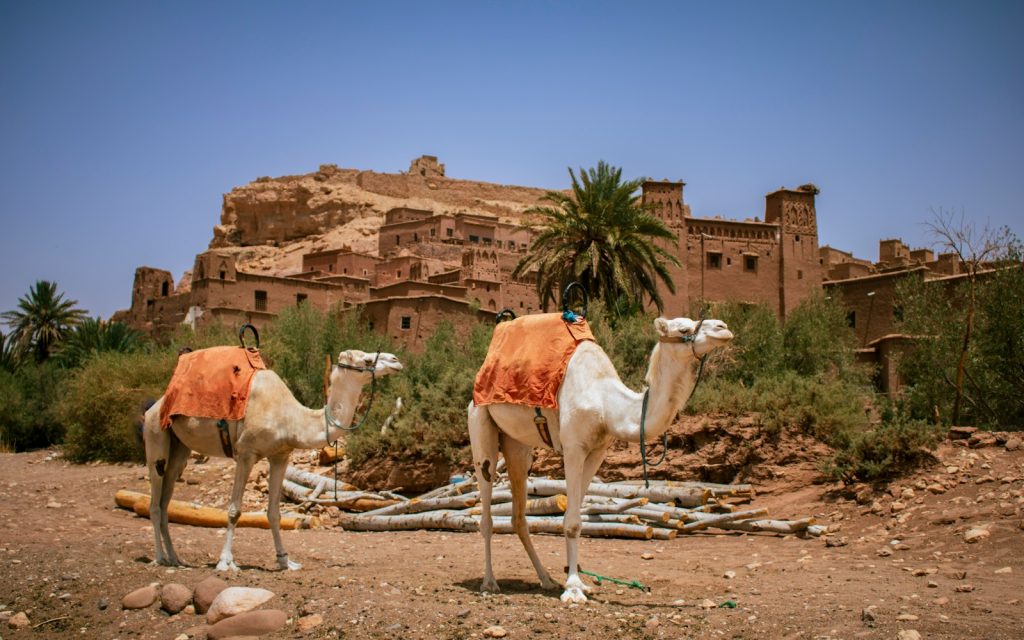
Quick Answer: What Is the 4-Day Marrakech to Merzouga Tour?
The 4-day Marrakech to Merzouga tour is a round-trip journey of about 1,100 km through southern Morocco. It crosses the High Atlas Mountains, passes the UNESCO-listed kasbah of Aït Benhaddou, follows the Dades and Todra Gorges, and reaches the Erg Chebbi dunes of the Sahara near Merzouga. Travelers ride camels at sunset, spend one night in a desert camp, and return to Marrakech through the Draa Valley. It is the most popular desert itinerary in Morocco for visitors with limited time.
At a glance:
| Detail | Information |
|---|---|
| Duration | 4 days, 3 nights |
| Start and end | Marrakech |
| Main destination | Merzouga and the Erg Chebbi dunes |
| Distance | About 1,100 km round trip |
| Accommodation | 2 nights in a hotel or guesthouse, 1 night in a desert camp |
| Best time | October to April (spring and autumn are ideal) |
| Difficulty | Easy, but with long driving days |
Why Take a 4-Day Desert Tour from Marrakech?
Merzouga is about 560 km from Marrakech, a drive of roughly 9 to 10 hours without stops. Doing it in two days is possible, but you would miss most of what makes the journey special. Four days gives you time to see the landscapes along the way, enjoy the desert at sunset and sunrise, and avoid spending every hour in a vehicle.
This route suits first-time visitors to Morocco, couples, families with older children, solo travelers, and anyone who wants to see the Sahara without a long, expensive expedition.
Day 1: Marrakech to Dades Valley via Aït Benhaddou
Driving time: about 7 to 8 hours including stops
Leave Marrakech early, around 7:30 AM. The road climbs into the High Atlas Mountains and crosses the Tizi n’Tichka Pass at about 2,260 meters, one of the highest paved mountain roads in North Africa. Expect hairpin bends, Berber villages built into the hillside, and wide views across the valleys. In winter, the pass can have snow, so check conditions before you travel.
Aït Benhaddou
Your first major stop is Aït Benhaddou, a fortified village (ksar) made of red earth. It is a UNESCO World Heritage Site and has appeared in films and series such as Gladiator and Game of Thrones. Walk through the narrow lanes, cross the riverbed, and climb to the top of the ksar for views over the surrounding valley. A local guide can explain how the families who still live here build and repair the clay walls.
Ouarzazate and the Road of a Thousand Kasbahs
After lunch, continue to Ouarzazate, often called the gateway to the Sahara. Film fans can visit Atlas Studios, while history lovers may prefer the Taourirt Kasbah. From there, the road follows the so-called Road of a Thousand Kasbahs through the Skoura palm grove and past the rose-growing area of Kelaat M’Gouna. If you travel in spring, you may see the rose harvest and can buy rose water and cosmetics.
You spend the first night in the Dades Valley, in a guesthouse often set among red cliffs and the rock formations known as the “Monkey Fingers.”
Day 2: Dades Gorges, Todra Gorge and Merzouga
Driving time: about 5 to 6 hours with stops
After breakfast, explore the Dades Gorges, where the road winds beside layered red and ochre cliffs. It is a good place for photos and a short walk.
Todra Gorge
Next comes Todra Gorge, where limestone walls rise to around 300 meters on either side of a narrow riverbed. It is a good spot for an easy stroll, and in warm months the cool water offers relief. Many travelers say this is their favorite stop before the desert.
Tinghir Palm Grove and the road to the dunes
Have lunch near the Tinghir palm grove, an oasis of date palms, small farms, and irrigation channels. From here the landscape changes: green valleys give way to rocky plains and, finally, golden sand.
Sunset camel trek and night in the Sahara
You arrive in Merzouga, a small village at the edge of the Erg Chebbi dunes, which rise to around 150 meters. In the late afternoon, mount your camel and ride about one to two hours into the dunes at sunset. The light turns the sand orange and then deep red.
At the desert camp you will usually enjoy:
- A traditional Moroccan dinner, often tagine
- Berber drumming and music around the fire
- Tea in a tent
- Stargazing in one of the darkest skies you will ever see
Camps range from simple shared tents to luxury tents with private bathrooms and beds. Choose according to your budget and comfort level.
Day 3: Sunrise in the Dunes and the Draa Valley
Driving time: about 6 to 7 hours
Wake early to watch the sunrise over the dunes. You can climb a dune on foot or return to the hotel by camel. After breakfast, you may add optional activities (extra cost):
- Rissani: a traditional market town and gateway to the historic Tafilalet region
- Khamlia: a village known for Gnawa music, with roots in sub-Saharan Africa
- 4×4 desert excursion or quad biking: a short ride across the plains and dunes
- Sandboarding: popular with younger travelers
Draa Valley and Tamegroute
The return journey goes west through the Draa Valley, the longest river valley in Morocco, lined with date palms and old kasbahs. A highlight is Tamegroute, a village famous for its green-glazed pottery and its historic Koranic library, which holds manuscripts centuries old.
Spend the night in Agdz or Zagora, in a kasbah-style guesthouse with a pool or a terrace, depending on the season.
Day 4: Return to Marrakech
Driving time: about 6 to 7 hours
On the final day, drive back toward Ouarzazate and cross the Atlas Mountains again through the Tizi n’Tichka Pass. This time you will see the views from the opposite direction and may stop at a roadside cooperative selling argan oil, minerals, and fossils from the region. You arrive in Marrakech in the late afternoon or early evening, tired but happy.
What Is Included in a Typical 4-Day Tour?
Packages vary, so always read the details. Most tours include:
- Transport in a private or shared air-conditioned vehicle with a driver
- 2 nights in a hotel or guesthouse and 1 night in a desert camp
- Breakfast and dinner each day
- Camel trek in the Sahara
- Hotel pickup and drop-off in Marrakech
Usually not included: lunches, drinks, optional activities, entry fees to some monuments, tips, and travel insurance.
Prices depend on the season, group size, and comfort level. Shared small-group tours are the most affordable, while private tours with luxury camps cost more. Compare several operators and check recent reviews before booking.
Best Time to Visit Merzouga
| Season | Conditions |
|---|---|
| Spring (March to May) | Warm days, mild nights, green valleys. One of the best times. |
| Summer (June to August) | Extremely hot in the desert, often above 40°C. Not recommended for most travelers. |
| Autumn (September to November) | Pleasant temperatures, clear skies. Ideal for stargazing. |
| Winter (December to February) | Warm days but very cold nights, and snow is possible on the Atlas passes. |
What to Pack
- Light, breathable clothing for the day and a warm layer or jacket for the desert night
- A scarf or shesh to protect your face from sun and sand
- Sunglasses, sunscreen, and a hat
- Comfortable walking shoes or sandals
- A small backpack for the camel trek, because large luggage usually stays at the hotel
- A power bank, since charging at camps may be limited
- Cash in Moroccan dirhams for tips, snacks, and souvenirs
Practical Tips for First-Time Visitors
- Book in advance during spring and autumn, when demand is highest.
- Choose your camp wisely. Ask whether bathrooms are private or shared and whether the camp is far from the village.
- Respect local customs. Dress modestly in villages and ask before photographing people.
- Stay hydrated. Carry bottled water, especially in warm months.
- Be flexible. Weather, road conditions, and traffic can affect timings.
- Tip fairly. Drivers, guides, and camp staff rely on tips, so keep small notes handy.
Is the 4-Day Tour Worth It?
Yes, for most travelers. A 3-day tour is faster but leaves little time at the destination. A 5-day tour is more relaxed but costs more. The 4-day itinerary balances time, cost, and scenery, with a full desert night, the main kasbahs and gorges, and a different route back that avoids repeating the same road.
Frequently Asked Question
How far is Merzouga from Marrakech?
About 560 km by road, which takes around 9 to 10 hours of driving without stops.
Can I visit Merzouga in 2 days from Marrakech?
Yes, but you will spend most of your time driving. Three or four days is far more comfortable.
Is the 4-day desert tour suitable for children?
Yes, for children comfortable with long car rides. Consider a private tour or a camp with beds and bathrooms for younger travelers.
Do I need a visa for Morocco?
Many nationalities can enter without a visa for short stays, but rules change, so check with your country’s official travel advice.
What is the difference between Merzouga and Zagora?
Merzouga has the taller, more dramatic Erg Chebbi dunes and a more traditional desert feel. Zagora is closer to Marrakech but has smaller dunes and is better for a shorter trip.
Is it safe to travel to Merzouga?
Tourist routes in southern Morocco are well established, and tours are widely used by visitors. Use a licensed operator and follow official travel advice.
Can I do this tour in winter?
Yes, but nights in the desert are cold, and snow can sometimes affect the Atlas mountain passes. Bring warm clothing
Final Thoughts
A 4-day journey from Marrakech to Merzouga combines mountain passes, ancient kasbahs, dramatic gorges, palm groves, and the golden dunes of the Sahara. It is demanding in terms of driving, but the reward is a night under the stars and a sense of Morocco that few other trips can offer. Pick a reliable operator, travel in the right season, and pack for both heat and cold, and this route will likely become the highlight of your trip.