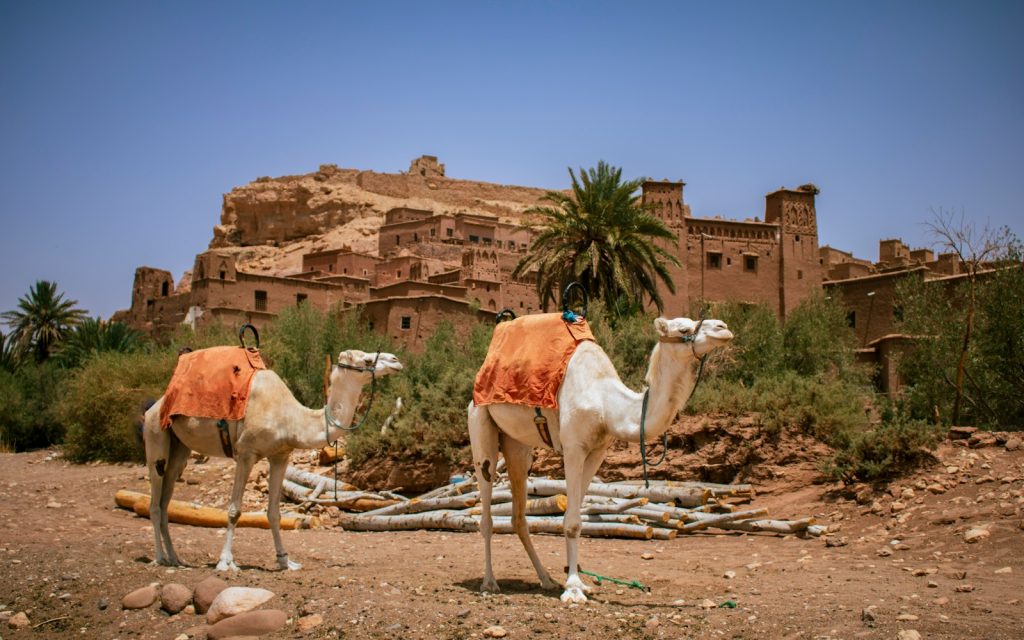
Dreaming of golden dunes, ancient kasbahs, and nights under a sky full of stars? An 8-day Sahara desert circuit from Marrakech to Merzouga is one of the best ways to see Morocco’s wild south. You cross the High Atlas Mountains, wander through palm-filled valleys, ride a camel into the Erg Chebbi dunes, and sleep in a Berber desert camp.
This guide covers the full day-by-day itinerary, the best time to go, what to pack, and how to choose a tour operator you can trust.
Why Choose an 8-Day Sahara Desert Circuit?
Many travelers book a 2-day or 3-day Merzouga trip from Marrakech. Those trips are fun, but they mean long hours in a vehicle and very little time to enjoy what you pass. An 8-day circuit changes the pace completely.
- More time in the desert. You get extra time in Merzouga for dune walks, sunrise, and local life.
- A relaxed schedule. Drives are shorter, with time to stop, take photos, and eat well.
- A loop, not a straight line. You return by a different route, so you see more of southern Morocco.
- Better value. Spreading the trip over eight days gives you more culture, scenery, and activities for each day you pay for.
8-Day Sahara Desert Circuit Itinerary
Day 1: Marrakech to Aït Benhaddou and Ouarzazate
Your journey starts in Marrakech and climbs the High Atlas Mountains over the Tizi n’Tichka Pass, which reaches about 2,260 meters. Along the road you will see Berber villages, terraced hillsides, and panoramic viewpoints.
Next comes Aït Benhaddou, a UNESCO World Heritage Site and one of Morocco’s most photographed fortified villages. This clay-built ksar has appeared in famous films and series. Take your time walking its narrow lanes up to the hilltop granary for views over the valley.
You spend the night in Ouarzazate, often called the “door of the desert.”
Day 2: Ouarzazate to the Dades Valley
Today you drive through the Skoura palm grove and along the Road of a Thousand Kasbahs. The scenery shifts constantly between red rock, green oases, and dusty mountain villages.
You reach the Dades Valley, known for its unusual rock formations, often compared to monkey fingers. The late afternoon light is excellent here, so it is a good time for a short walk or photography. Overnight in a guesthouse in the valley.
Day 3: Dades Valley, Todra Gorge, and Erg Chebbi
After breakfast you head to the Todra Gorge, where limestone walls rise up to 300 meters on either side of a narrow canyon. It is cool, dramatic, and a favorite stop for hikers and rock climbers.
From there you continue across wide, open plains toward Merzouga. In the late afternoon you meet your camel and ride into the Erg Chebbi dunes as the sun turns the sand orange and red. After the ride you arrive at your desert camp, enjoy a traditional Moroccan dinner, and listen to Berber drumming around the fire.
Day 4: Sunrise in the Sahara and a Free Day in Merzouga
Wake early to watch the sunrise from the top of a dune. It is quiet, cool, and one of the most memorable moments of the trip.
After breakfast you can spend the day your own way. Popular options include:
- Sandboarding on the high dunes
- A 4×4 excursion through the desert plains
- A visit to the nomad families who live near the dunes
- Exploring the village of Khamlia, known for Gnawa music
- A short trip to the fossil workshops around Erfoud and Rissani
An extra night in Merzouga lets you relax instead of rushing, which is the biggest advantage of an 8-day plan.
Day 5: Merzouga to the Draa Valley
Today you leave the dunes and drive west through dramatic landscapes of black rock desert and dry riverbeds. Your route passes Tinghir and its large palm oasis before heading toward the Draa Valley, Morocco’s longest river valley.
You arrive in the evening and sleep in a traditional kasbah-style guesthouse among the palm trees.
Day 6: Draa Valley, Agdz, and Zagora Region
Explore the oasis villages, old mud-brick kasbahs, and date palm groves. This is a good day to slow down. You can walk through the palmeraie, visit a local family, and learn how dates and henna are grown and used.
In the Zagora area you can see the famous sign pointing to Timbuktu, a reminder that this was once a caravan route across the Sahara. Depending on your plan, you may also visit Tamegroute, known for its green-glazed pottery and its old Quranic library.
Day 7: Draa Valley to Aït Benhaddou and the Atlas
On the way back toward Marrakech you cross a different stretch of the Anti-Atlas and High Atlas ranges. Stop for lunch with mountain views, then continue toward the Atlas foothills.
Many itineraries finish with an overnight stay near the mountains. There you can enjoy a final quiet evening, a Moroccan tagine, and time to reflect on the journey.
Day 8: Return to Marrakech
You cross the Tizi n’Tichka Pass one more time and arrive in Marrakech in the afternoon. Your driver can drop you at your riad, hotel, or the airport, depending on your travel plans.
Best Time to Take the 8-Day Sahara Desert Circuit
The best seasons are spring (March to May) and autumn (September to November). Days are warm, nights are comfortable, and skies are usually clear.
- Winter (December to February): Days are pleasant, but desert nights can be very cold. Bring warm layers.
- Summer (June to August): Temperatures in Merzouga often pass 40°C. It is possible but not comfortable for everyone.
If you want the best mix of weather and fewer crowds, aim for late March, April, October, or early November.
What to Pack for a Sahara Desert Trip
Pack light, but do not forget the essentials:
- Comfortable, breathable clothing for the day
- A warm jacket or fleece for the evenings
- A scarf or shesh to protect against sun and sand
- Sunglasses, sunscreen, and a hat
- Closed shoes for walking, plus sandals
- A small daypack and a reusable water bottle
- A power bank, since camps may have limited charging
- Any personal medication
- Some cash in Moroccan dirhams for tips, snacks, and souvenirs
What Is Included in a Typical 8-Day Tour?
Most private and small-group tours include:
- Private air-conditioned vehicle with an experienced driver-guide
- Accommodation in riads, kasbahs, guesthouses, or hotels
- Breakfast and dinner each day
- A camel ride at sunset in Merzouga
- A night in a Berber desert camp
- Local guide visits at key sites
Entrance fees to monuments, lunches, drinks, and tips are often extra. Always check the full inclusions before you book so there are no surprises.
Tips for Choosing a Tour Operator
A good tour is about more than the route. Look for these things:
- Clear itinerary and price. The company should tell you exactly what is and is not included.
- Real reviews. Check Google, TripAdvisor, and recent traveler feedback.
- Licensed local guides. Experienced guides make the trip safer and far more interesting.
- Flexible plans. A good operator will adjust the pace or add stops if you ask.
- Camp quality. Ask about beds, toilets, and shared or private tents.
- Small groups or private tours. You get more freedom and a more personal experience.
Responsible Travel in the Sahara
The desert is fragile, and local communities depend on respectful tourism. Please:
- Take your waste with you or dispose of it properly
- Ask before photographing people
- Buy crafts and food from local artisans
- Use water carefully, especially in remote areas
- Respect local customs and dress modestly in villages
Frequently Asked Questions
Is an 8-day Sahara circuit suitable for families?
Yes. The pace is relaxed, and most children enjoy the camel ride and sandboarding. Tell your operator the ages of your children so they can plan accordingly.
How long are the drives each day?
Most days include between 3 and 6 hours of driving, with plenty of stops. The longest drive is usually Day 3 or Day 5.
Is it safe to travel in the Sahara?
Morocco’s main desert routes are well established and popular with tourists. Traveling with a licensed guide and a reputable company is the best way to stay safe.
Can I customize the itinerary?
Most operators can. You can add Fes, Essaouira, or the Atlas Mountains, or change the number of nights in Merzouga.
Do I need a visa?
Many nationalities can enter Morocco without a visa for short stays. Rules change, so check your country’s current requirements before you travel.
Final Thoughts
An 8-day Sahara desert circuit from Marrakech to Merzouga Dunes gives you the best of Morocco: mountain passes, UNESCO sites, deep gorges, palm oases, and unforgettable nights in the desert. With more time and less rushing, you enjoy every stop instead of just passing through it.
Ready to start planning? Contact a trusted local operator, share your dates, and build the journey that fits your style. The dunes are waiting.