From the Medina to the Dunes: A Traveler’s Guide to Visiting the Sahara from Marrakech
There’s a particular kind of magic in leaving the bustle of Marrakech’s souks behind and, a day or two later, standing barefoot on a dune as the sun drops behind an endless sea of sand. It sounds like a stretch desert and city, worlds apart but a Sahara excursion from Marrakech has become one of Morocco’s signature travel experiences, and it’s far more accessible than most people expect.
The Sahara Isn’t Next Door But It’s Closer Than You Think
Let’s set expectations first: Marrakech itself doesn’t sit at the edge of the Sahara. The true dune fields are roughly 550–560 kilometers away, across the Atlas Mountains. That means this isn’t a day trip it’s a journey, and honestly, the journey is half the appeal.
Most travelers reach the desert through one of two gateway towns:
- Merzouga, home to Erg Chebbi, Morocco’s tallest and most photogenic dunes (some reach 150 meters)
- Zagora, gateway to Erg Chigaga, a bit closer to Marrakech and slightly less crowded
How Long Should You Plan For?
Two days, one night is the minimum. You’ll spend most of it driving, usually toward Zagora since it’s the shorter route, with one overnight in a desert camp. It’s a whirlwind, but it works if time is tight.
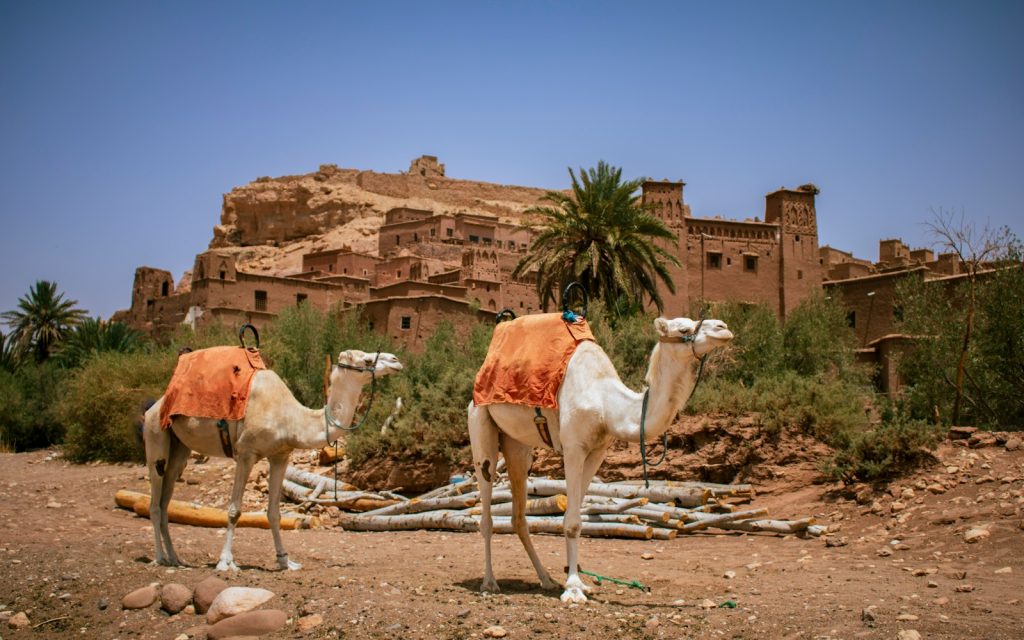
Three days, two nights is the sweet spot for most people. This is enough time to reach Merzouga’s bigger dunes and actually enjoy them, while still stopping along the way at places like the fortified village of Ait Benhaddou, the Atlas Mountains’ Tizi n’Tichka pass, and the dramatic Todra or Dades Gorges.
Four days or more gives you breathing room an extra night in the desert, more time in the gorges, or a different return route so you’re not retracing your steps.
What the Trip Actually Looks Like
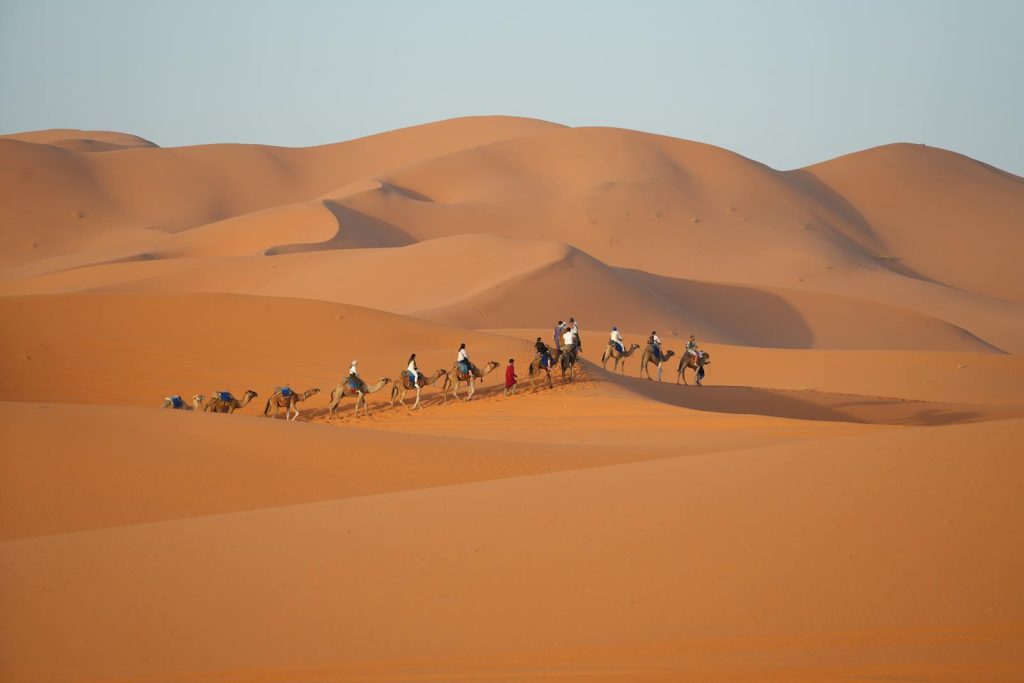
The road portion is typically covered by 4×4 or shared van, weaving through mountain passes and past kasbahs that look like they belong in a different century (some of them have, in fact, appeared in film and television productions). As you get closer to the dunes, the vehicles stop, and camels take over for the final stretch a slow, swaying approach that feels like the right way to arrive somewhere this dramatic.
Nights are spent in Berber-style camps: carpeted tents, communal dinners under the stars, sometimes drumming around a fire. Waking before dawn to climb a dune and watch the sunrise is, for most travelers, the single moment the whole trip was built around.
A Few Things to Know Before You Go
- Timing matters. Aim for October through April. Summer daytime temperatures in the desert are genuinely brutal.
- Book through a reputable operator. Marrakech riads and travel agencies arrange these trips constantly, and a good guide makes the mountain roads and desert logistics far easier.
- Consider flying partway. If you’re short on time, flying into Ouarzazate or Errachidia and joining the desert leg from there can cut hours off the trip.
- Pack for temperature swings. Desert nights get cold, even when the days are warm layers are your friend.
Is It Worth It?
For most travelers, yes emphatically. The drive itself passes through some of Morocco’s most striking landscapes, and the desert delivers something no amount of research quite prepares you for: a silence and a scale that’s hard to find almost anywhere else. If you’re planning time in Marrakech, building in three or four extra days for the Sahara is, for many visitors, the best decision of the whole trip.